
| Authored by Rhodora G. Magan | Published on April 21, 2025 |
The arrival of the Spanish in the Philippines marked a magmatic transformation of rice— once central to indigenous belief systems in the precolonial era—into a peripheralized ‘other,’ whose value shifted from sacrality to banality. ‘Othering’ rice in this context means disenchanting it by stripping it of its ceremonial role, as the Spanish leveraged mass-produced rice to establish economic dominance through exploitative means. Noncompliance with the new policies triggered violent repression, which impacted the cognitive and cultural rhythms of the indigenous people and dislocated belief systems that have sustained them for generations.
The Mythical Trappings
Through the Austronesian migration (around 3000 to 1500 BCE) rooted in Taiwan (Peterson, 2009), rice agriculture reached the Philippines down to eastern Indonesia or Wallacea, and onward to the Solomon Islands, Tonga, Fiji, and finally Polynesia and Hawaii. This long history of rice cultivation across islands laid the groundwork for the rich diversity of rice adapted to different Philippine ecologies. Out of over 120,00 varieties of rice in the world, hundreds of these are found in the Philippines.
Rice—a small, oval-shaped grain that comes in various colors, sizes, and textures, including white, brown, jasmine, black, and red rice—holds a deeply integral role in Philippine folklore. The operative aspect of storytelling is shaped by the interplay between food and narratives—ethnographic elements—that deter cultural forgetting. Arup K. Chatterjee’s conceptualization, coinage, and introduction of the study of gastromythology (2022) as a multimodal and multifactorial analysis of food aptly resonates with the theme of cultural longevity. Its parameters of endurance convey much of the community’s pugnacity to elude the shackles of unknowing and/or unremembering. Calibrating memory is explicitly inhered in the departure from that cultural penitentiary. Among the indigenous people, that cavern of fictive thoughts is a constant illumination.
In the southern part, among the Zambales people, minor gods called anitos held specific roles. Dumagan, the god of good harvest, made rice yield fuller grains. His brothers shared his power: Kalasakas brought early ripening of rice stalks, Kalasokus turned the grains yellow and dry, and Damulag protected the rice flowers from hurricanes. Each of these gods had many priests and priestesses in their service. Additionally, the early inhabitants of the region recognized a god of wind and rain, Aniton Tauo, who—punished for his conceit—was demoted in rank. To appease him, they offered the finest kind of pinipig, young rice grains pounded thin and brittle (Perez, 1903). Meanwhile, among the Manobo of Mindanao, Kakiadan is revered as the goddess of rice, while Taphagan serves as the goddess of harvest, guarding the rice stored in the granary (Garvan, 1981).
Further north, rice plays a central role in both daily life and oral tradition for the Ifugao of the Cordillera region. The Hudhud epic of Aliguyon highlights rice cultivation rituals and the heroic journey of Aliguyon himself. The Ifugao are also known for keeping bulul—carved ancestral figures that, through ritual, transcend their human form (tag-tagu) to become sacred granary icons, spiritual guardians of harvest, abundance, and ancestral presence.
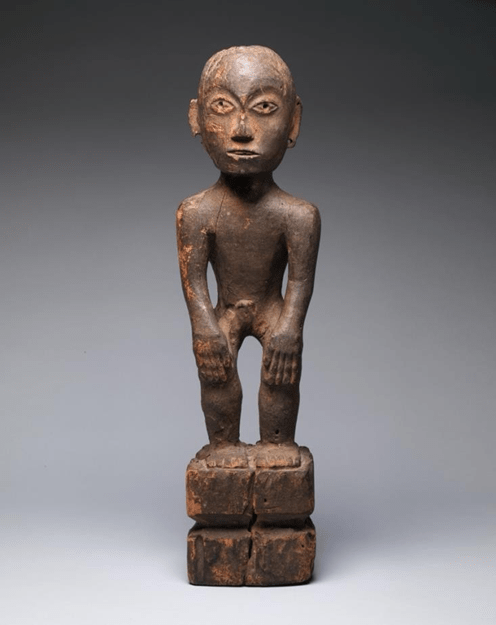
Moreover, the Ibaloi legend of Dackbongan, as recorded in Philippine Folk Literature: The Myths (1993), retells how the creator god Kabunian gifted rice to Earth through the priest Dackbongan, thus adding it to the early people’s diet, which had previously consisted only of sweet potato, taro, pork, and other meats. Though Dackbongan failed to perform the required ritual, prompting Kabunian to send rats to plague the crops, the god later created cats to restore balance—leading to the origin of both animals and the kosday kanyaw harvest ritual, which the Igorots still practice today.
Through these folktales, rice transcends its status as a mere agricultural product and becomes a symbol of divine favor, communal unity, and spiritual connection.
Rupture of Cultural Rhythms
Spanish colonization reshaped rice production in the Philippines through exploitative policies and forced labor, resulting in widespread abuse. In 1585, resistance in Pampanga—a key rice-producing region—erupted against the encomienda system, which enriched the Spanish crown and elites while exploiting Indigenous labor. The encomienda, similar to feudalism, granted Spanish settlers (encomenderos) land in exchange for forced labor from the Indigenous population. Blas de la Serna, an encomendero, was documented in 1582 for his brutal treatment of laborers (Forster, 1956). As Forster further notes, labor diverted to Ilocos mines left Pampanga’s fields fallow, which caused famine and deaths among the natives.
In 1757, another revolt occurred in Tarlac. Farmers were angry at the disproportionate amount of rice they had to give up, especially given the shortages they faced as a result of poor management and colonial strategies. The uprising was violently suppressed by Spanish forces, with many farmers being killed or imprisoned. This unrest was not an isolated incident but part of a broader pattern of agrarian resistance driven by predatory colonial policies. An example was the bandala system (implemented in the early 17th century and remained in place in various forms until its abolition in 1782).
The term bandala comes from the Tagalog word mandala (from Sanskrit mandala, meaning ‘circle’ or ‘disc’)—a round stack of rice stalks ready for threshing. Over time, bandala came to signify the state-imposed annual exaction of goods—particularly rice in regions like Pampanga. Under this system, Filipino farmers were compelled to sell their produce to the colonial government at low, fixed prices, often receiving only promissory notes in return. For provinces like Pampanga and the Tagalog lowlands, this amounted to near-confiscation. Combined with restricted access to fertile agricultural zones, the policy exacerbated food scarcity, deepened rural poverty, and triggered significant social instability. Noncompliance was frequently met with punitive measures, further entrenching colonial control over subsistence lifeways.
Disenchantment as Traumatic
Max Weber’s theory of disenchantment (Entzauberung) explains how modernization and reason—rooted in the Enlightenment ideals that informed Spanish colonization—stripped rice of its sacred significance, reducing it to a pragmatic commodity. Under Spanish rule, the economic value of rice was prioritized to serve the colonial economy, overshadowing its spiritual and communal importance in indigenous belief systems. Antonio Gramsci’s concept of cultural hegemony further clarifies this transformation, as the Spaniards reshaped Filipino culture, religion, and economy—turning rice into a tool for economic control rather than a sacred symbol. The push for mass rice production, driven by colonial technologies, became central to the economic system that fiscalizes the spiritual and spiritualizes the fiscal. This new principle fundamentally altered Filipino survival.
When Manila’s port was effectively opened to world trade in 1789, surging rice production supported a growing population, including Chinese traders. By 1835, when ports were officially opened, the demand for non-rice products like sugar, indigo, molasses, abaca, tobacco, and coffee led farmers to shift away from rice cultivation to meet market trends. Forster (1956) describes the consequences as approaching “near famine” (37), compounded by the harsh treatment of Indigenous laborers. Even after Spanish rule, famine recurred under the American regime, marked by rice crises in 1919 and 1935 (Chiba, 2012), which caused widespread starvation. Rice disenchantment triggered a cycle of famine that entrenched poverty in the Philippines—a condition that persists today, with millions still unable to eat adequately.
In line with Catherine Carruth’s trauma theory, trauma is never fully experienced in the moment; instead, it surfaces in fragments—through memory, repetition, or sudden reliving of the event. This trauma resurfaces recursively in the cultural shift from viewing rice as sacred to perceiving it solely as a commodity. This is evidenced in a 2018–2019 Food and Nutrition Research Institute (FNRI) survey, which revealed that Filipino households waste an average of 53 grams of cooked rice daily—equivalent to 6.4 grams of uncooked rice per person (Campos, 2024: online). In 2023, Agriculture Secretary Francisco Tiu Laurel Jr. noted that current levels of discarded rice could feed millions of Filipinos annually.
This behavior stands in contrast to the “rice is life” mentality—a motto aligned with the United Nations’ declaration of 2004 as the International Year of Rice—that continues to resonate with many Filipinos, if not all. This sentiment, deeply rooted in rice’s status as a national staple, underscores the cultural imperative not to waste it. The contradiction reveals a fractured relationship with rice—an index of historical and cultural trauma that, as Cathy Caruth argues, resists full comprehension.
For Filipinos subjected to Spanish colonial policies, this trauma was lived but not fully understood until much later—and even now, its totalizing effect remains difficult to grasp. This unresolved trauma and the cultural fracture it created have contributed to a paradox: while rice is carelessly discarded, the country faces recurring shortages, becoming one of the world’s largest importers.
The enduring legacy of rice entzauberung —manifesting in both wastage and shortage— remains elusive, a wound that cannot be easily healed. This inability to confront the issue stems from the colonial disruption of indigenous reverence for the grain—a rupture that can never be fully reversed. Because even in episodes of reversal, the deep cultural and historical disconnect between Filipinos and the sacredness of rice persists, preventing any true restoration of its original significance. This ongoing severance perpetuates both physical and symbolic scarcity—the cultural erasure of rice’s spirituality residualizes its being a mere commodity.
Conditional Re-echantment through Gastromythology
Despite the commodification of rice during and after colonial rule, certain heirloom varieties—such as tinawon and unoy from the Cordillera region—continue to carry deep spiritual and cultural significance. Across the Philippines, over 300 heirloom rice varieties persist, often described as ancestral strains cultivated by the Ifugao and other upland communities. In these indigenous communities, rice is not merely a staple crop but a sacred offering. Traditional practices like Benguet (planting rice as a prayer for a good harvest) and patay na pananaw (spiritual rites for rice planting) reflect enduring beliefs that rice is a divine gift—bestowed by both gods and nature.
In Annelise Orleck’s book, We Are All Fast-Food Workers Now: The Global Uprising Against Poverty (2028), efforts by Vicky Carlos Garcia and Montanan Mary Hensley (a former Peace Corps volunteer in the Cordillera in the 1970s) to revitalize indigenous rice cultivation by marketing heirloom varieties to gourmet markets—from Manila to Manhattan—underscore that rice remains a bearer of astrality.
While it is ironic that global networks are now enlisted to preserve what globalization nearly erased, movements like Slow Food— founded by Carlo Petrini in Italy in 1986, as an alternative to fast food— demonstrate how global circuits can serve as instruments of cultural rescue. The fate of rice, then, is not solely one of disenchantment, but of conditional re-enchantment—shaped by the tensions and collaborations between local templates and transnational systems.
Mediated by global culinary capital and ethical consumption, its meaning is not entirely lost but reconfigured: transformed from ritual sustenance into a heritage commodity that bridges the sacred past with a complex, hybrid present. Yet in this act of bridging, trauma lingers; in the gap between spectrogenic disenchantment and re- enchantment, it persists—elusive, unresolved, but ever-present. In this sense, trauma itself animates the arcane ontology of rice that once gave it sacred weight before it became pedestrian.
Where historical trauma has stripped rice of its sacred meaning, trauma transforms from mere wound into a pathway. According to Cathy Caruth, trauma is not only a disruption we suffer alone, but something that can be shared and transmitted, and through this transmission, a voice—painful, visceral, and true—can emerge from the very place of the wound. Trauma, in its haunting quality, creates a space where we can remember, reconnect, and ultimately gastromythologize rice again—announcing potentiality for clinal healing—because in expressing trauma, we open doors to myth, memory, and meaning.
References
Bulul and the social significance of rice. https://www.nationalmuseum.gov.ph/2022/11/30/bulul-and-the-socio-cultural-significance-of-rice/
Campos, O. (3 December 2024). Rice wastage could feed 2.8m Filipinos annually— Tiu-Laurel. Manila Standard. https://manilastandard.net/business/314531724/rice- wastage-could-feed-2-8m-filipinos-annually-tiu-laurel.html
Chatterjee, A. K. (2022). The gastromythology of English tea culture: On the UKTC’s advertisements and making tea a “fact” of English life. Canadian Journal of History, 57(1), 47-80.
Chiba, Y. (2012). The 1919 and 1935 rice crises in the Philippines: The rice market and starvation in American colonial times. Philippine Studies: Historical and Ethnographic Viewpoints 58 (4/4), 523-556.
Forster, J.C. (1956). “The encomienda system in the Philippine Islands: 1571-1597.” Master’s Theses. Paper 1010. http://ecommons.luc.edu/luc_theses/1010
Garvan, J. M. (1981). The Manobos of Mindanao (p. 190 ff.). Washington, DC: U.S. Government Printing Office.
Orleck, A. (2018). We are all fast-food workers now: The global uprising against poverty wages. Boston: Beacon Press.
Perez, D. (1903). Relation of the Zambals. In E. H. Blair & J. A. Robertson (Eds.), The Philippine Islands: 1493–1898(Vol. 47, pp. 300–306). Cleveland, OH: The Arthur
H. Clark Company. (Original work published 1903)
Peterson, J. A. (2009). The Austronesian moment. Philippine Quarterly of Culture and Society 37(2/3), 136–158.
 GASTROMYTHOLOGY